
How to Trim Your Own Hair at Home: Easy Step-by-Step Guide for Beginners
If you Trim your own hair at home it can seem intimidating, but with the right tools and technique, it’s completely doable. Whether you’re trying to save money on salon visits or simply want to maintain your hairstyle between professional cuts, learning how to trim your hair at home is a useful skill. In this guide, we’ll walk you through the most effective, safe, and simple ways to trim your hair at home. From essential tools to step-by-step instructions, we’ll ensure you feel confident and prepared to give yourself the perfect trim.
Tools You’ll Need to Trim Your Own Hair at Home
Before you start trimming your hair, having the right tools is essential to achieve a clean, professional-looking trim. Here’s what you’ll need:
- Hair Cutting Scissors: Avoid using regular household scissors. Invest in sharp, high-quality hair cutting scissors to make precise cuts.
- Comb: A fine-toothed comb will help you detangle your hair and keep it straight while trimming.
- Clips or Hair Ties: These will help section off your hair to ensure even trimming.
- Mirror: Ideally, a handheld mirror combined with a wall mirror will help you see the back of your head clearly.
- Spray Bottle: Keep your hair slightly damp to make cutting easier and more accurate.
Step-by-Step Guide on How to Trim Your Own Hair
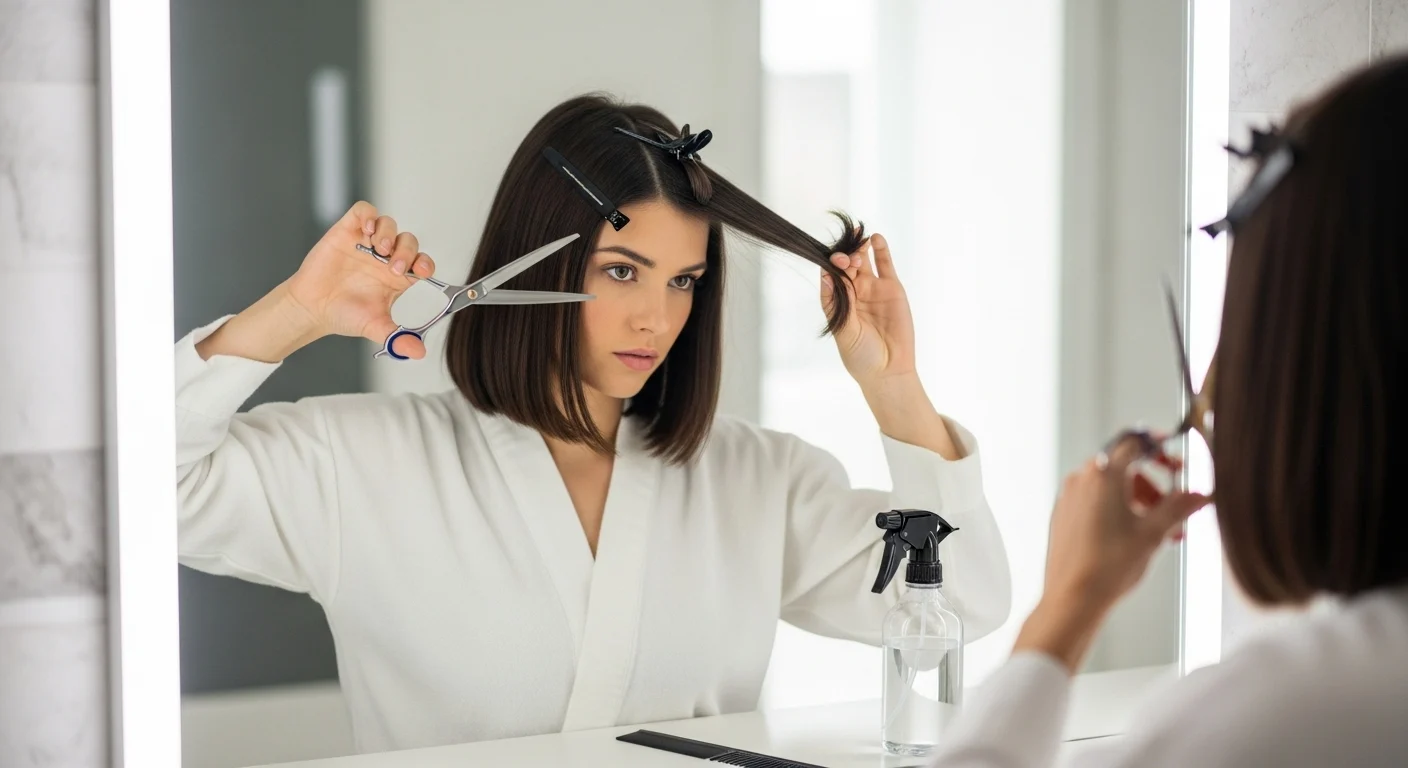
1. Prepare Your Hair
Start with clean, dry, or slightly damp hair. Wet hair can stretch, causing uneven trimming when it dries, so aim for slightly damp hair. Detangle your hair with a comb, making sure there are no knots, as they could result in uneven cuts.
2. Section Your Hair
Sectioning your hair will make the trimming process easier and ensure an even cut. Divide your hair into at least four sections:
- Part your hair down the middle
- Clip each section on the sides and back to prevent stray hairs from interfering.
3. Trim Small Amounts
When trimming, start by cutting a small amount to avoid cutting too much at once. Start from the bottom and work your way up, trimming only a small fraction of an inch at a time. This is especially important if you’re trimming your hair for the first time.
4. Trim the Ends
Hold each section of your hair between your fingers, creating a straight edge. Trim the ends carefully, cutting just the very tips. If you’re looking for a straight cut, use a comb as a guide to ensure the cut stays even across the section.
5. Check for Balance
After trimming each section, make sure to check if both sides are even. It’s easy for one side to end up longer than the other, so always double-check with a mirror and compare the length on both sides.
6. Layer Your Hair (Optional)
If you’re aiming for layers, you can carefully trim sections of your hair at different lengths. Hold your hair at a 45-degree angle and trim in small amounts. Be patient—layering can take time, but the results will give you a more natural look.
Common Mistakes to Avoid While Trimming Your Hair
- Cutting Too Much at Once: It’s tempting to go for larger cuts, but this increases the risk of cutting unevenly. Always trim small amounts.
- Not Checking the Length Regularly: Continuously check the balance and length of your trim. If you forget to do this, you might end up with uneven sections.
- Using Dull Scissors: Dull scissors can cause the hair to fray and look messy. Keep your scissors sharp for a clean cut.
✅ Learn how to fix uneven haircuts at home if you accidentally trim too much.
Tips for Maintaining Your Trim
After you’ve trimmed your hair, it’s important to keep it looking fresh:
- Moisturize Regularly: Trimming can cause your hair ends to look drier, so use a nourishing conditioner or hair oil to maintain softness.
- Avoid Over-Trimming: Only trim every 6-8 weeks to keep your hair looking healthy without compromising its length.
Also, check our post on how to keep your hair healthy and shiny naturally for long-lasting results.
How to Trim Your Own Hair at Home According to Different Hair Types

Different hair types require slightly different approaches to ensure a clean, even trim. Here’s a breakdown of how to trim your hair based on your hair texture:
1. Straight Hair
Straight hair is often easier to trim because it lays flat and is less likely to have hidden layers. To trim straight hair:
- Start with the Basics: Use the sectioning method and cut small, even amounts from the ends.
- Work Slowly: Make sure to constantly check for balance by comparing both sides. Straight hair can show unevenness quickly.
2. Curly Hair
Trimming curly hair can be tricky, as curls tend to shrink when they dry. To trim curly hair:
- Trim When Dry or Slightly Damp: It’s best to trim curly hair when it’s dry or slightly damp to see the true curl pattern.
- Cut Small Sections: Cut small amounts to avoid cutting too much, as curls tend to bounce up after being trimmed.
- Trim in Layers: Curly hair naturally has layers. Work with the curl pattern to ensure your cut maintains a natural flow.
3. Wavy Hair
Wavy hair can be a bit more challenging than straight hair because it often has natural waves that change shape as it dries. To trim wavy hair:
- Trim in the Direction of the Wave: Follow the natural wave pattern to avoid cutting against the grain and creating an uneven shape.
- Use the “Dusting” Technique: For subtle trims, use the “dusting” technique, which involves trimming only the very tips to maintain the length while removing split ends.
4. Thick Hair
Thick hair can be heavy, and cutting it requires careful attention. Here’s how to trim thick hair:
- Use Thin Sections: Take thinner sections of hair to ensure even trimming, especially around the back and sides.
- Trim Slowly: Cut small amounts at a time, as thick hair can be unforgiving when over-trimmed.
- Layering for Shape: If you want to shape your thick hair, layer it by trimming different sections at varying lengths.
5. Fine Hair
Fine hair is delicate and can be more difficult to trim without creating uneven cuts. To trim fine hair:
- Trim Small Amounts: Cutting too much off can leave fine hair looking limp and thin. Start small.
- Use the Blunt Cut Method: For a fuller look, use a blunt cut at the ends to create the illusion of more volume.
When to Seek Professional Help
While trimming your own hair can be a fun and rewarding experience, there are times when seeking professional help is necessary:
- Major Changes: If you’re looking to drastically change your hairstyle or cut layers, it’s best to leave it to a professional.
- Troublesome Sections: If you’re unsure about trimming certain parts of your hair (like the back), a professional stylist can help.
- Uneven Cuts: If you’ve attempted a trim and notice unevenness after drying, it’s time to seek assistance from a stylist to correct it.
Conclusion
Trimming your own hair at home doesn’t have to be a daunting task. With the right tools, technique, and patience, you can achieve a clean, fresh trim without ever leaving the house. Remember to start slow, cut small amounts, and always check for balance. By following these tips and steps, you can confidently maintain your hair and save money on salon visits.